Somebody asks me this question at the front desk almost every week. Usually they are holding a towel, a little nervous, pointing at the schedule like it might bite. Hot Pilates or hot yoga? Same heat, same sweat, so what is the actual difference?
Fair question. I have taught in both rooms, trained in both rooms, and eventually built a studio around what each one does best. So here is the honest version, the way I would explain it to a friend before their first class.
Pilates started with one person's obsession with control. Joseph Pilates built his method, Contrology, in the early 1900s around precise movement, deep core strength, and springs. Those springs still define Pilates today. They push back, they support, and they make small movements feel enormous.
Yoga comes from a much older place. Thousands of years of breath, balance, flexibility, and meditation, linked through postures you flow between or settle into. The heated version arrived much later, when someone realized a hot room deepens the stretch and turns the whole practice up.
So before anyone even turns on the heat, the two practices are already pointed in different directions. Pilates was built to strengthen and control. Yoga was built to open and release. Everything after that follows from those two starting points.
Descriptions only go so far. Here is what your body experiences, minute to minute.
You start on the mat, usually with core work, and from there the class barely stops moving. Sequences build in layers. A bridge becomes a bridge with pulses, then a bridge with a hold, then a variation that finds your glutes from an angle you did not know existed. The reps are high, the movements are small, the rest is short, and the burn is specific. You always know exactly which muscle is working, because it is busy telling you. Your instructor cues your alignment the whole way through, the music keeps the pace honest, and your heart rate stays up until the final stretch.
A heated yoga class moves in waves instead. You flow through linked postures, hold a pose long enough to breathe into it, then melt into stretches that open your hips, hamstrings, shoulders, and spine. Balance work shows up often. So do quiet moments where the effort is mental, holding still while your body begs you to fidget. The intensity rises and falls instead of staying pinned up. You leave feeling lengthened and wrung out, breathing slower than when you walked in.
People think the heat is the workout. It is not. The heat is the amplifier.
In hot yoga, warmth is part of the point. Muscles stretch further in a hot room, joints move more freely, and the sweat itself is treated as part of the cleanse. In hot Pilates, the heat works more like a training partner who refuses to let you coast. It raises your heart rate, makes the same strength work feel harder at the same load, and turns a mat class into a conditioning session.
The heat is not the workout. The work is the workout. The heat just makes sure you feel every rep of it.
One warning that applies to both rooms: warm muscles feel more flexible than they actually are. A good instructor will cue control over depth every single time. Listen to them.
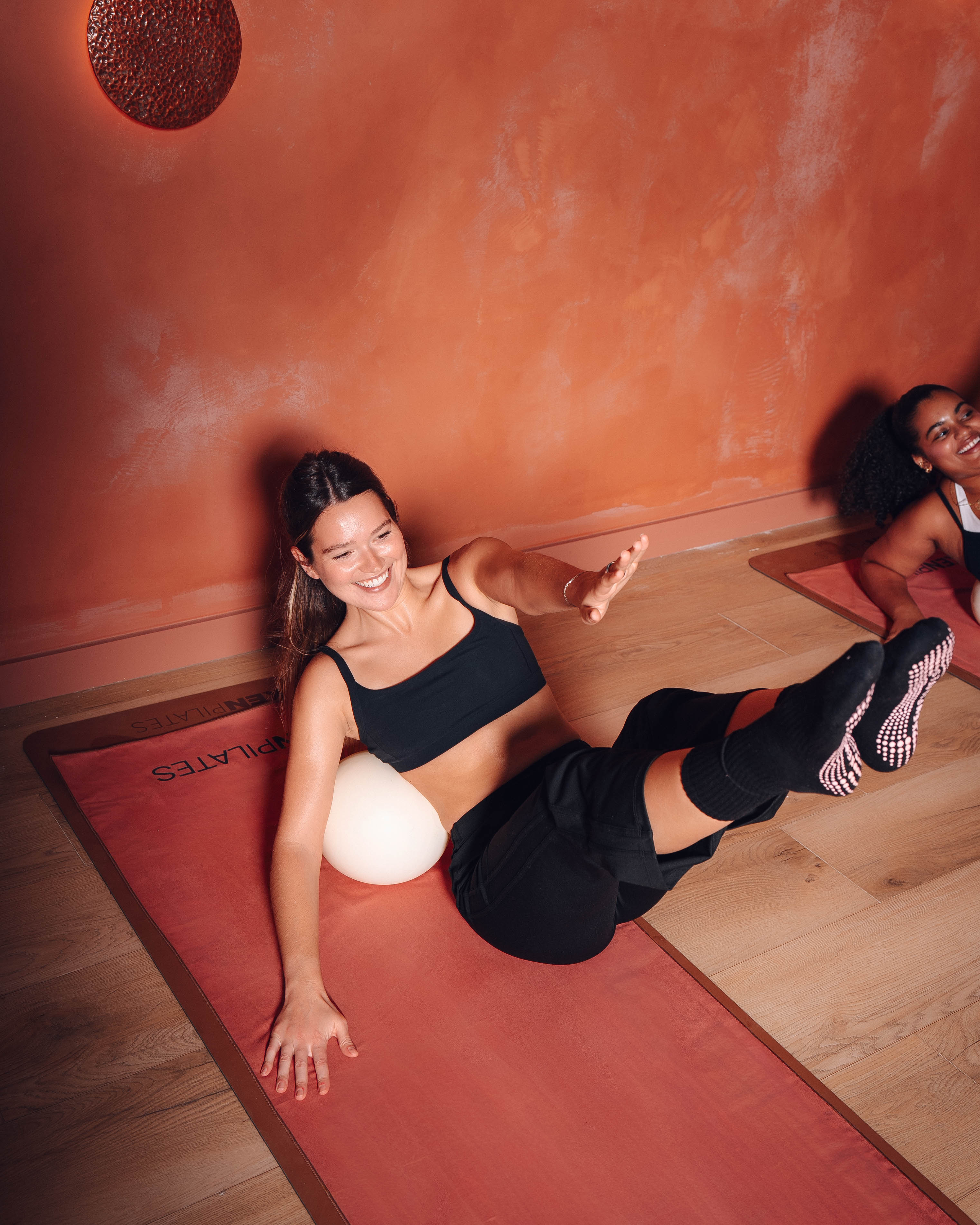
This is the clearest dividing line between the two. Pilates is strength training. The resistance is real and progressive, whether it comes from springs, props, or your own body weight, and your core, glutes, and postural muscles do serious work. Flexibility improves too, mostly as strength through a full range of motion.
Yoga leads with flexibility and mobility. You build genuine strength in held postures and flows, but the resistance is your body weight in fixed shapes, so the strength ceiling arrives sooner.
The good news for your joints: both practices are low impact. No running, no jumping, nothing pounding your knees. Pilates tends to be gentler still, because spring resistance supports the movement and ranges stay controlled. Yoga asks more of wrists and shoulders in weight bearing poses, and deep stretches in a hot room can tempt you past your safe range. Wherever you start, tell your instructor about your injuries before class. We have modifications for almost everything.
Choose hot Pilates if you want measurable strength, a stronger core, better posture, and training that supports the rest of your life: lifting, running, dancing, all of it. Choose it if you like structure, counts, and knowing exactly what you are training.
Choose hot yoga if flexibility, mobility, and a mental downshift are what your week is missing.
And if you are like half the people in my classes, you will end up doing both. Pilates builds strength through the ranges yoga opens. Yoga gives back the mobility, breath control, and calm that hard training spends. Pilates a few times a week as the base, yoga once a week as the reset. That rhythm works.
Now let me tell you about the class that made me stop choosing.
Sculpt is its own thing. It is not a Pilates subtype, and it is not yoga with weights. At Ken Pilates, Sculpt is where I stopped separating the disciplines and started blending them: strength training, yoga, Pilates, and calisthenics, integrated into one class that takes the best tool from each.
From Pilates, it takes precision and core control. From yoga, breath, mobility, and flow. From strength training, progressive resistance and real load. From calisthenics, bodyweight mastery, the kind of strength you carry with you everywhere. One class, all of it, sequenced so each part makes the others work harder.
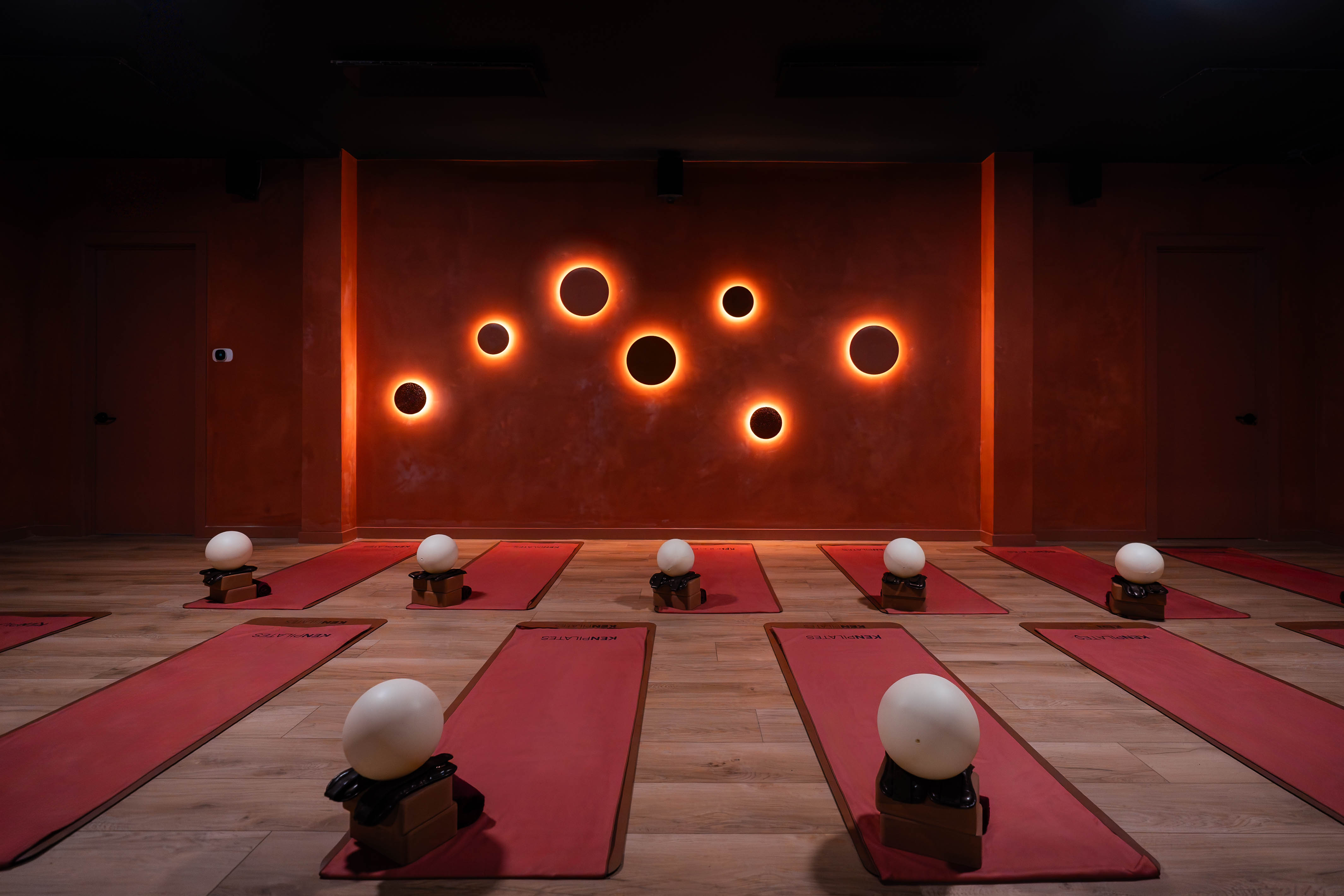
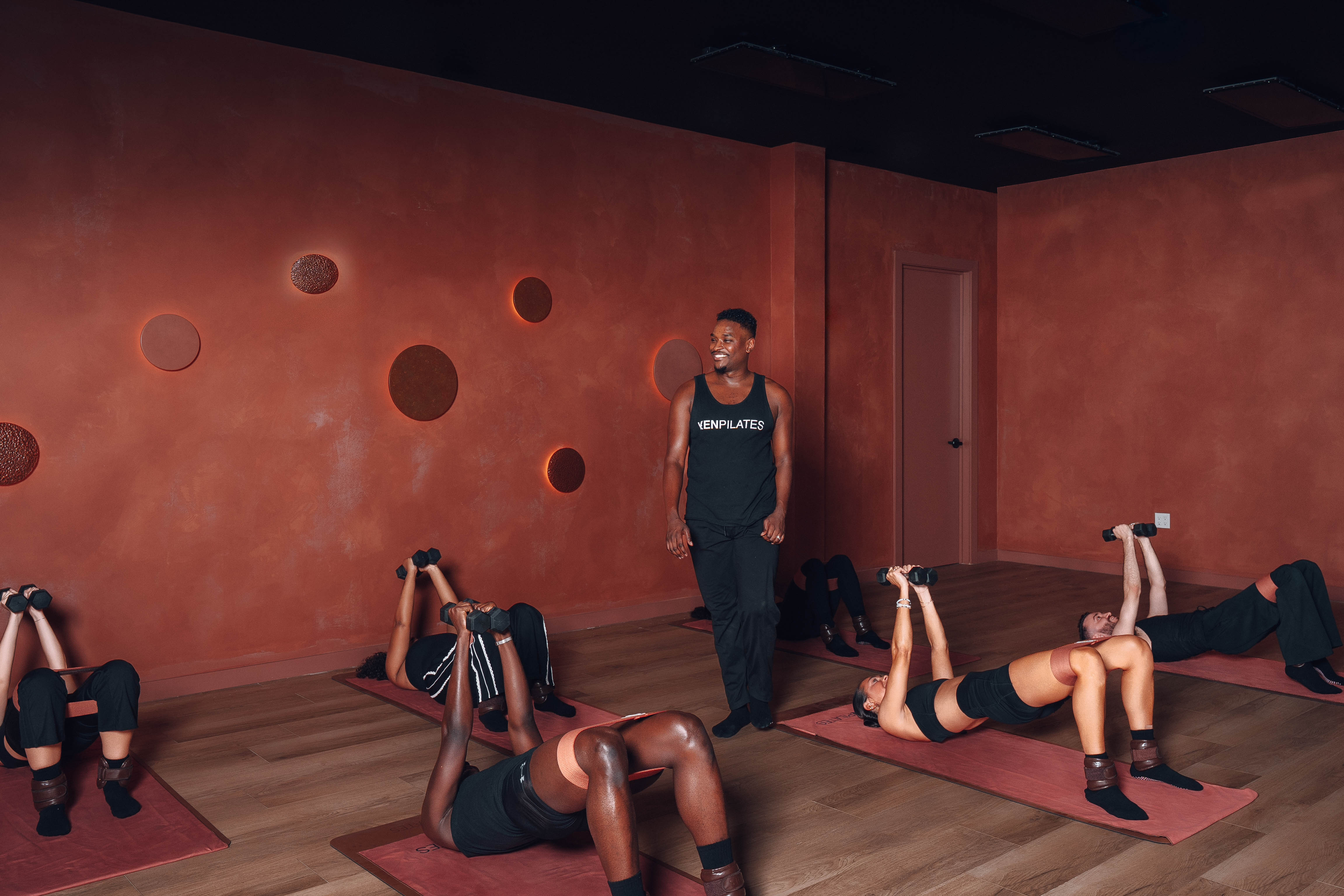
It comes in two forms here. Hot Mat Sculpt is the heated version: fifty minutes on the mat in an infrared room heated up to 105 degrees, layered sequences, very little downtime, your full body working the entire time. Sculpt & Strength is the springs version, built on the wall mounted springs in our Tower Room, where the resistance gets heavier and the strength work gets serious. Same blend, two different kinds of hard.
This is the method I have spent my career building, and I built it around the people in the room. Community is not the decoration here. It is the engine.
One more thing, because I hear this worry constantly. You do not need Pilates experience to take our classes, and you do not need a workout habit either. You need a workout habit or the desire to build one, because we will give you a habit.
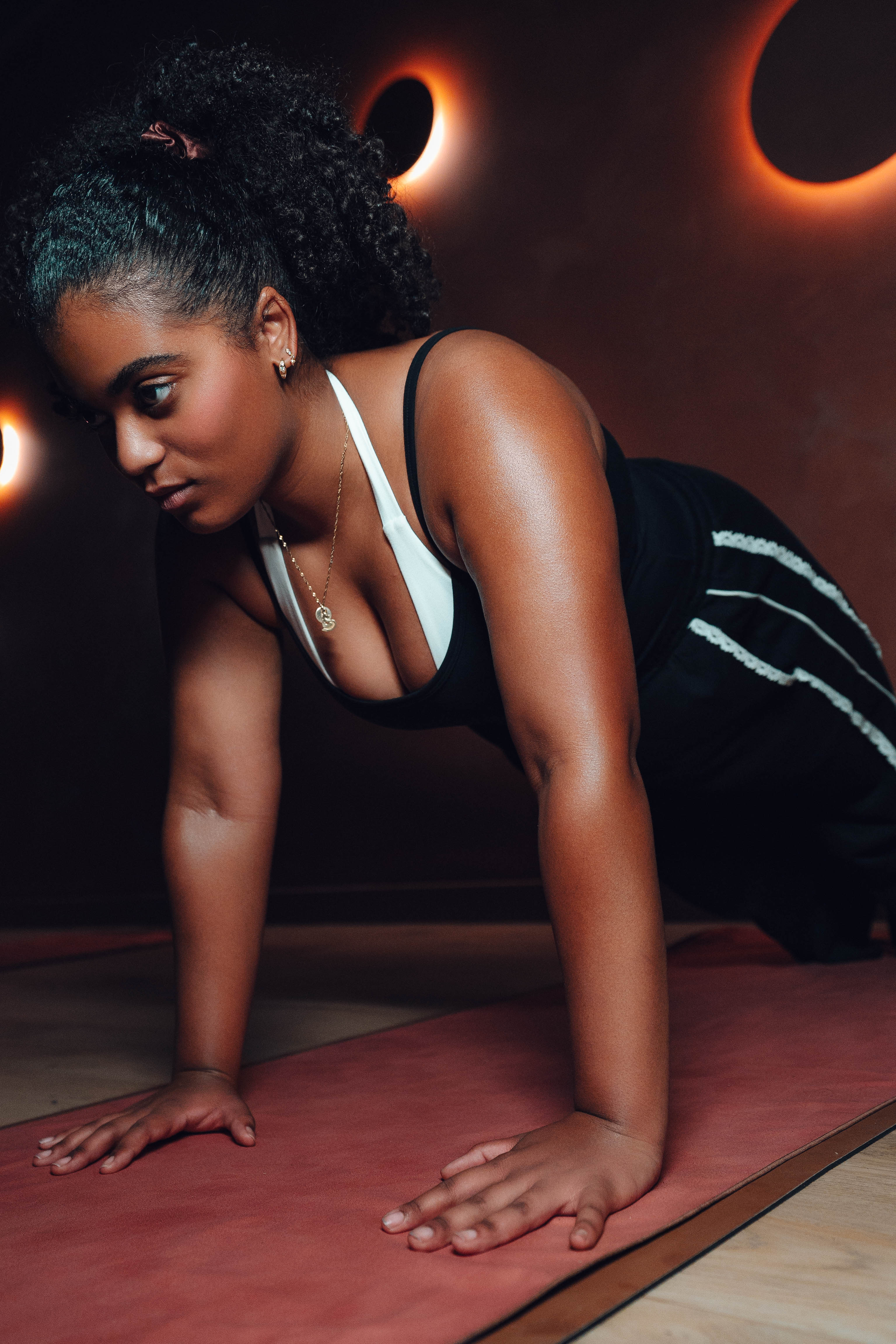
The classes are intense, and that is on purpose, but intensity is not a gate. Instructors offer modifications in every class, and you scale the work while you learn it. Want the foundations first? Start with a private session and we will teach you one on one, at your pace, until the group room feels like home.
New to the studio? Start with our intro offer, 3 classes for $60, and split them across the rooms while you decide:
So, hot Pilates or hot yoga? My honest answer is that the binary is a little broken, and Sculpt is my attempt to prove it. Pick the room that matches what your body is asking for this week. Or skip the choosing entirely and come feel the blend.
Find us at 541 6th Ave, Floor 4, in Chelsea. A single class is $47, and if you are new, the intro offer was made for exactly this question: 3 classes for $60. Take a heated one, take a springs one, take the one you are most curious about, and decide with your body instead of a blog post.
Book your intro offer here:
See you in the room.
- Ken